In recent decades, treatments for cancer have improved and deaths due to cancer have decreased. But unfortunately, not all Americans benefit from these successes. Many groups in Wisconsin and nationwide experience a greater burden of cancer along the continuum from prevention to detection, diagnosis, treatment, survivorship, to end-of life.
Moving forward, CHDI has particular interest in cancer screening navigation and informed decision-making research interventions, treatment and clinical research, and research on the relationship between social determinants and biomarkers in the differences in cancer health outcome.
Mission
Partner with communities, UW and Carbone Cancer Center faculty to reduce health outcome differences in cancer burden through research, outreach, education, and training.
Goals
- Increase research conducted by UW Faculty and UW Carbone members, as it relates to the differences in cancer health outcomes
- Implement community outreach, education, and program development and evaluation activities with impacted communities
- Promote increased recruitment of populations affected by differences in cancer health outcomes into UW Carbone clinical care and research
- Provide training and mentoring opportunities
What we do
Education
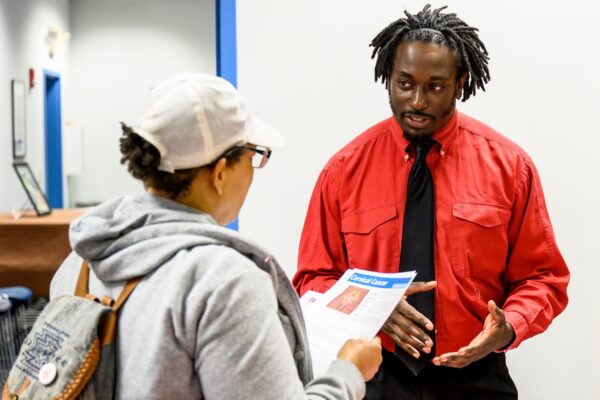
Cancer, Clear & Simple are educational materials about cancer developed by CHDI. It includes a curriculum, Facilitator Guide and educational handouts around cancer basics, cancer prevention and self-care, and cancer screening and detection.
Research
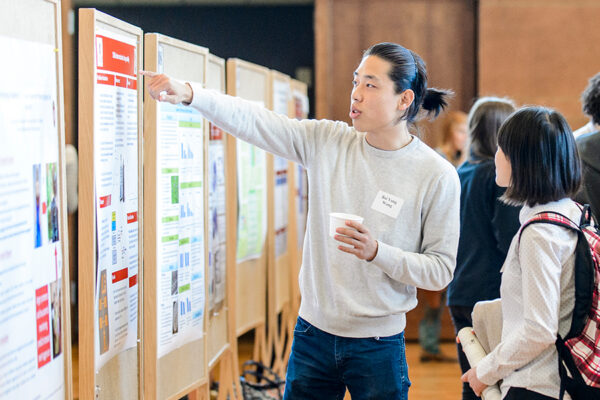
We focus on formative research, community partnership relating to the differences in cancer health outcomes, grant proposal development, research project coordination, data analysis and interpretation and the development of publications.
Outreach
Emphasizes development and coordination of coalitions and advisory boards, design of education and facilitator training, development of educational and marketing materials based on health literacy and adaptation and dissemination of resources.

Engaging Participants in Sample Donation and Research: A Research Study
Dr. Earlise Ward’s team is looking for participants to share their thoughts about giving samples, like blood or saliva, to help with research.
In phase 1, participation includes joining one group meeting for up to 90 minutes. In phase 2, participation involves responding to one survey that will take no more than 20 minutes. These activities can be completed online or in-person.
The research team will provide $50 for group meeting participation and $20 for survey participants.
Please contact the research team at 608-262-5533 or mogaka@wisc.edu for more information and to see if you qualify for participation.